Contact
Jim Now
Contact
Jim Now

A friend of mine recently told me he was planning to write a book on global public relations crises. He suggested I write a chapter. So that I could understand what he was talking about, I asked him to name a truly global PR crisis.

Remember the bizarre scene in the movie Patch Adams when Robin Williams, playing a medical student, looks through his medical school record for the reasons he’s being expelled and discovers that one of the complaints against him is “excessive happiness”?

The public relations profession continuously suffers from schizophrenia. On one hand, we want to be at the table making decisions and guiding strategy with the boss in good times and bad. On the other hand, many of us want to serve as the guiding conscience of our organizations.

This is the time of year when many of our senior colleagues are nominated for election to the PRSA College of Fellows. As I begin my 21st year as a Fellow, it’s interesting to reflect on the experiences of all those I have coached and mentored over the years.

There has been a moderate amount of jibber-jabber about Brian Williams’ situation, probably about what the situation deserves. Lucky for him, there have been an enormous number of significant and newsworthy events about the news business during the week when he would have occupied almost all the headlines otherwise. He’s one lucky dude.
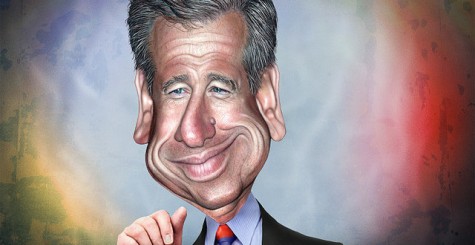
Liars always know. In more than 40 years of working with organizations, institutions, senior people, businesses, agencies and the news media through an extraordinarily broad spectrum of problems and serious circumstances, I have yet to meet anyone who accidentally lied.

Mr. Williams’s career, like most journalists of note, was largely built on catching perpetrators and fakers by spotting those who failed to observe or purposely avoided heeding these axioms.

Brian Williams’ toxic silence strategy is having a very predictable outcome. The process reminds me of the story of the three-legged pig.

A Contingency Mindset throughout your readiness thinking and planning acknowledges that as comprehensively and carefully as you prepare for the communication, contact, interactions and engagement that will be expected of us throughout the course of a crisis, and your forecast responses applying all of your years of experience, there will still be those off-the-wall, large and surprising situations and circumstances that blindside. Coming from nowhere these events will be extremely time and attention-consuming, and very costly to manage, mitigate, control or overcome.

This is the beginning. It is a quest. It is a personal study every communicator can participate in, will participate in, and should participate in. The result will be more powerful, effective, positive, professional speech and writing.
 Sign Up For My Free Monthly Newsletter